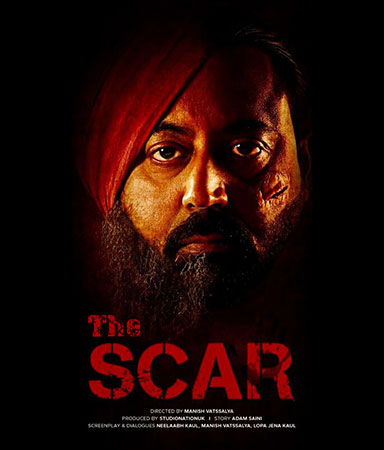
Directed By:
Manish VatssalyaProduced By:
StudionationUK LtdStory By:
Adam SainiThe Scar: The Cost of Belonging
Scar is a searing reflection of the American dream turned nightmare—told through the harrowing journey of the Dhillon family, refugees from the anti-Sikh violence that erupted in India after the assassination of Prime Minister Indira Gandhi. They arrived in the United States with hope, believing their sacrifices would be honored in a land that promised liberty.
Amandeep Singh Dhillon, a proud Sikh and decorated war hero, embodied that promise. He earned the Medal of Honor for bravery in Afghanistan, defending the very ideals that drew his family across oceans. Yet after 9/11, the climate shifted. Their brown skin and turbans—once symbols of heritage and honor—became targets. Misidentified, vilified, and feared, they became victims of ignorance and rage.
The tragedy deepens when Mr. Dhillon’s son, Harjeet, is murdered in cold blood—brutalized by assailants who couldn’t distinguish between fear and hate. Worse still, justice eludes the Dhillon family. Instead of support, Mr. Dhillon faces suspicion. The system that should protect him becomes complicit in his pain.
As hate crimes rise again in present-day America—fueled by divisive rhetoric, racist dog whistles, and policies that embolden extremism—the scars of past violence feel painfully present. Today’s headlines echo yesterday’s wounds. Mr. Dhillon’s story is not just history—it’s warning.
This isn’t fiction. It’s a reflection of real pain.
Since 2001, Sikh Americans have been among the most targeted religious groups in the U.S., with hate crimes spiking after 9/11 and again in recent years due to resurgent white nationalism and divisive political rhetoric. The FBI recorded 198 anti-Sikh hate crime victimizations in 2022 alone, the highest ever reported. Yet experts estimate that Sikhs are hundreds of times more likely than other Americans to experience hate crimes, many of which go unreported.
The scars run deep. From the Oak Creek massacre in 2012, where a white supremacist murdered seven Sikhs inside a gurdwara, to the FedEx shooting in 2021, where four Sikh workers were killed, the pattern is unmistakable. These are not isolated incidents—they are symptoms of a system that fails to protect its most vulnerable.
Scar dares to ask: How does one heal in a country that refuses to recognize the wound?
This isn’t just a film. It’s a reckoning.